Learning to hold a pencil and draw different types of lines is an important early step toward writing letters and numbers. Our free printable line tracing worksheets help nursery, LKG, preschool, and kindergarten children develop pencil control, hand-eye coordination, and essential pre-writing skills through fun tracing activities.
At WorksheetBazaar, we’ve created 5 colorful line tracing worksheets featuring cute cartoon characters, playful illustrations, and easy-to-follow dotted lines.
These worksheets are suitable for children aged approximately 3–5 years and are available as free printable PDF downloads.
Download Free Line Tracing Worksheets PDF
Explore our collection of five printable tracing worksheets below. Each worksheet includes child-friendly illustrations and dotted tracing paths to make early writing practice enjoyable.
Simply preview your favorite worksheet, download the PDF, and print it on A4 paper.
1. Horizontal Line Tracing Worksheet (Sleeping Lines)
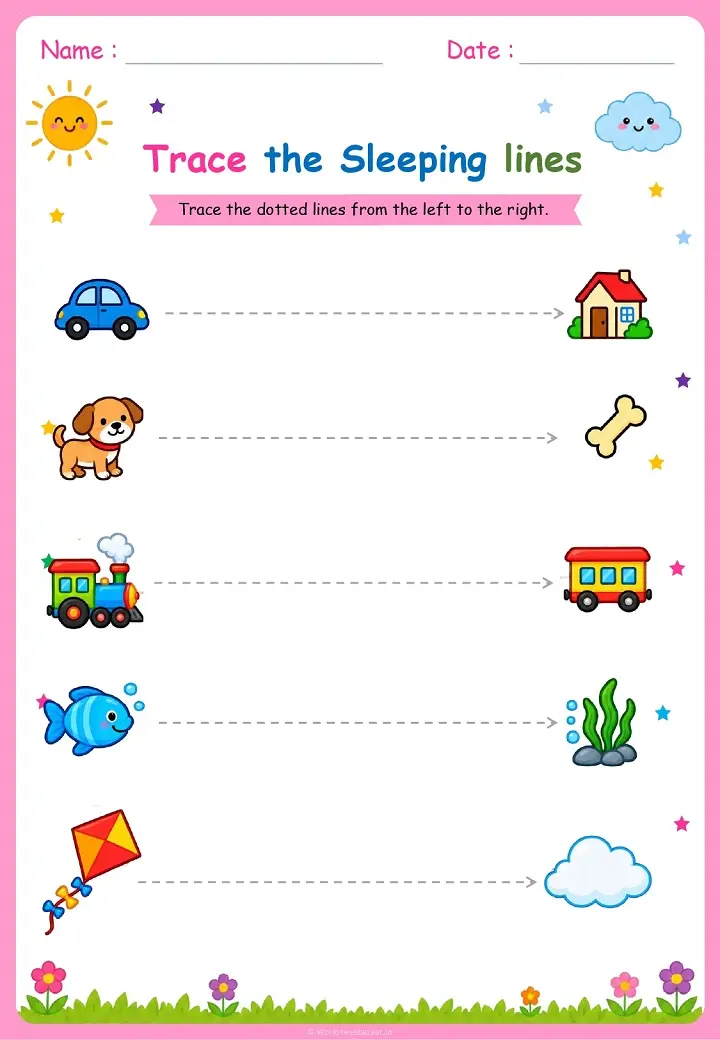
Help your child practice drawing straight lines from left to right with our horizontal line tracing worksheet. Horizontal lines, also called sleeping lines in many Indian preschools, are among the easiest pre-writing strokes for beginners.
This worksheet features colorful cartoon characters and dotted horizontal lines that children can trace to develop better pencil movement and control.
What children will practice:
- Tracing straight horizontal lines
- Moving a pencil from left to right
- Improving hand-eye coordination
- Developing early writing confidence
2. Vertical Line Tracing Worksheet (Standing Lines)
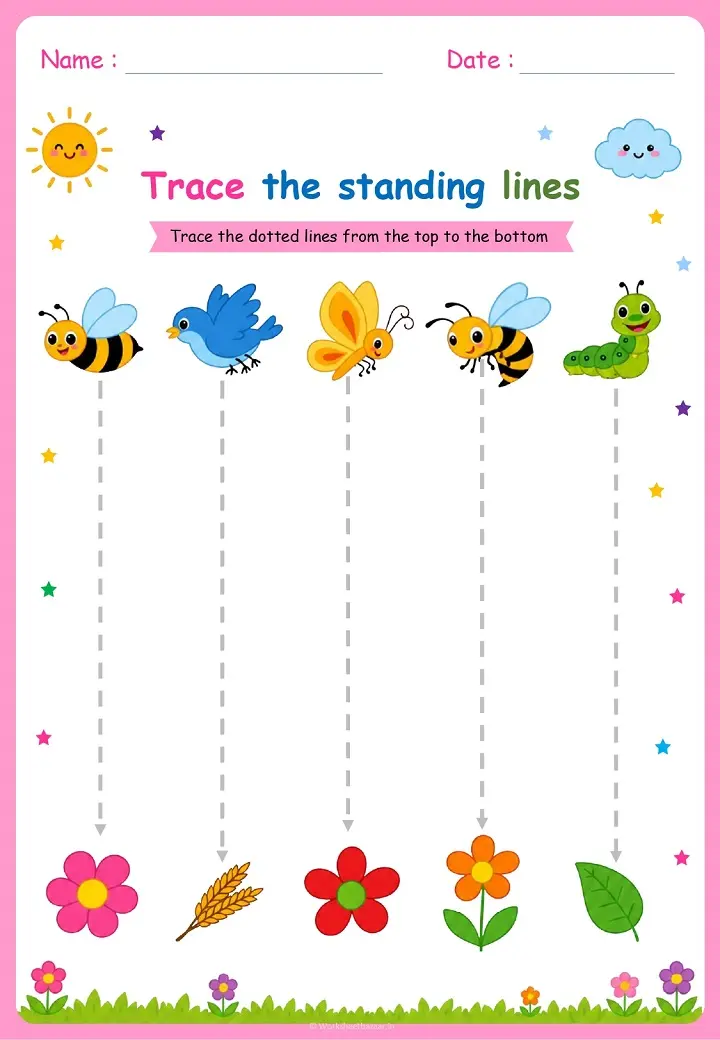
Introduce your little learner to vertical or standing lines with this fun vertical line tracing worksheet for nursery kids.
Vertical lines are straight lines that move from top to bottom. Practicing these strokes helps children become familiar with movements used when forming letters and numbers.
Our printable worksheet uses engaging cartoon illustrations and dotted vertical lines to make tracing practice more enjoyable.
What children will practice:
- Tracing vertical standing lines
- Practicing top-to-bottom pencil movement
- Improving fine motor coordination
- Recognizing straight-line patterns
3. Slant Line Tracing Worksheet (Diagonal Lines)
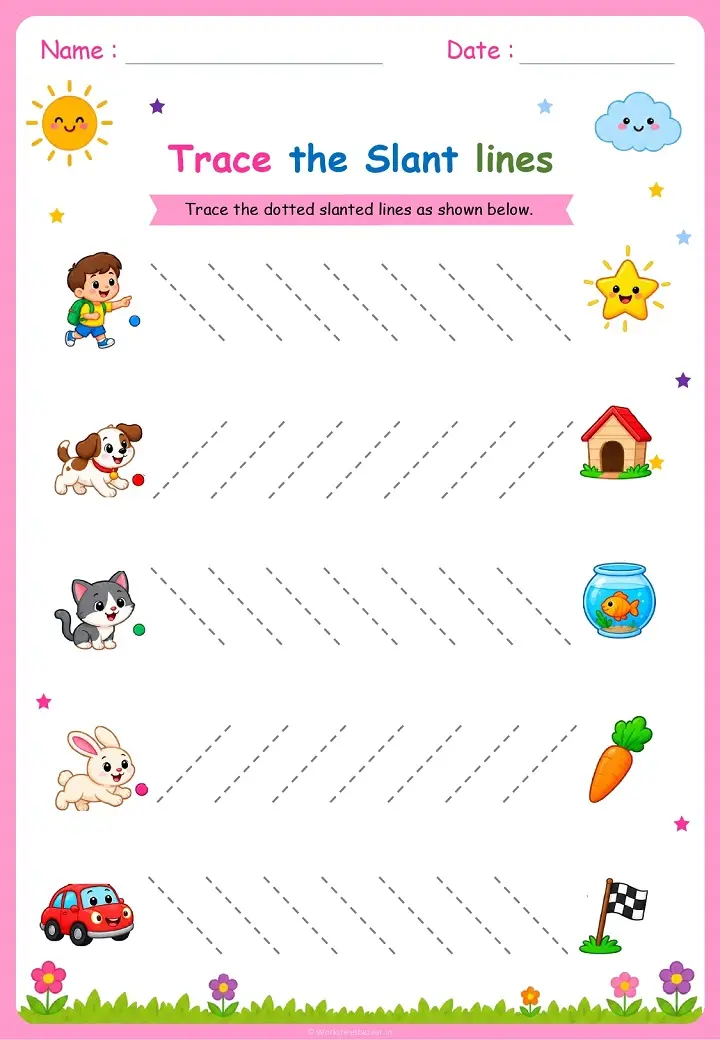
Make pre-writing practice exciting with our slant line tracing worksheet for kids.
Slanting lines, also known as diagonal lines, are useful pre-writing strokes for letters such as A, K, M, V, W, and X.
Children can trace the dotted slanting lines while enjoying cute characters and colorful illustrations.
What children will practice:
- Drawing diagonal lines
- Improving directional pencil movement
- Developing better hand control
- Preparing for letter formation
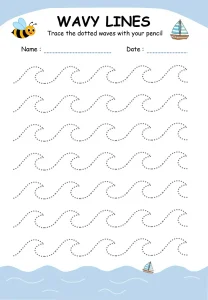
4. Curved Line Tracing Worksheet
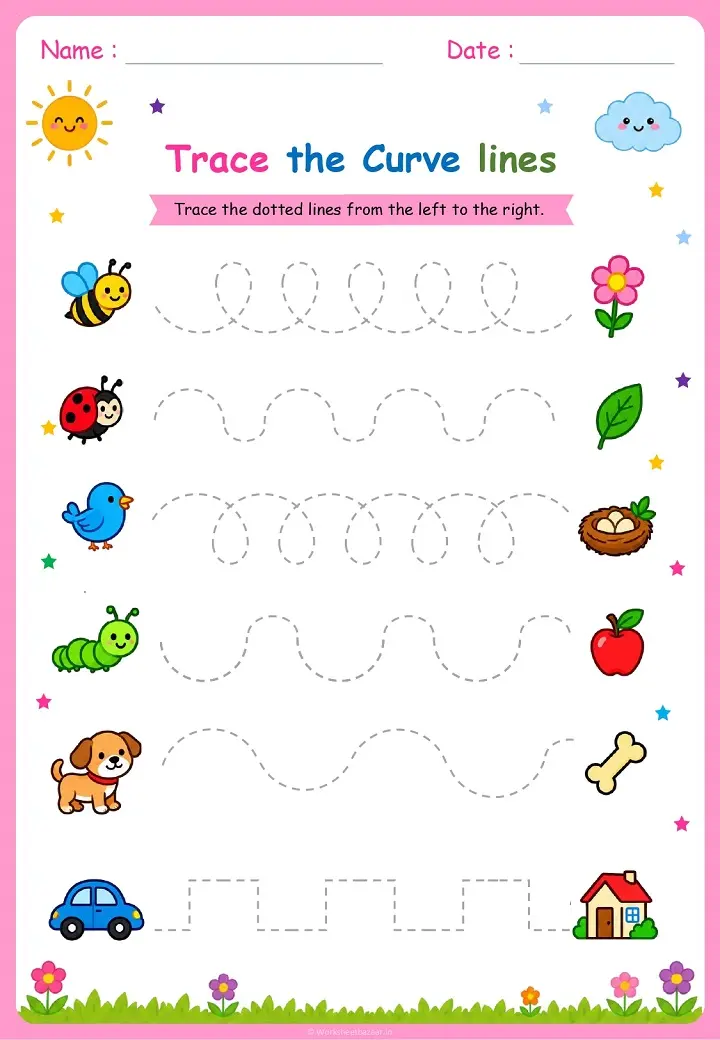
Learning to draw curves is an important part of early writing development.
Our curved line tracing worksheet for preschool kids introduces children to smooth, curved pencil movements through easy-to-follow dotted tracing paths.
Practicing curved lines helps children prepare for rounded letters such as C, O, S, and U.
The worksheet includes adorable cartoon illustrations to keep little learners interested.
What children will practice:
- Tracing smooth curved lines
- Controlling pencil movement around bends
- Developing finger and wrist coordination
- Preparing for rounded letter shapes
5. Zigzag Line Tracing Worksheet
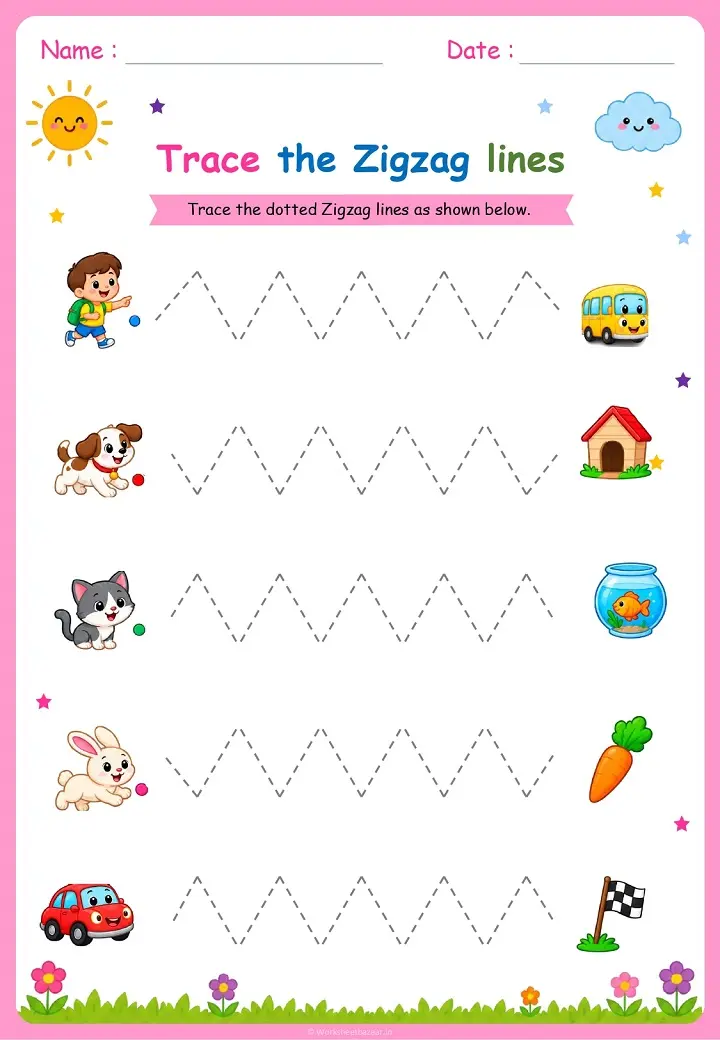
Ready for a slightly more challenging tracing activity?
Our zigzag line tracing worksheet for kids helps children practice changing pencil direction while following a dotted zigzag pattern.
This fun worksheet features colorful characters and playful illustrations that encourage children to trace from one end of the line to the other.
Zigzag tracing is particularly useful for developing directional control and coordination.
What children will practice:
- Tracing zigzag patterns
- Changing pencil direction
- Improving visual-motor coordination
- Building confidence with more complex lines
What Are Line Tracing Worksheets?
Line tracing worksheets are simple educational activities that help young children learn how to control a pencil by following dotted or dashed lines.
Before children begin writing letters and numbers, they benefit from practicing basic pre-writing strokes.
Common types of line tracing activities include:
- Horizontal Lines: Straight lines moving from left to right.
- Vertical Lines: Straight lines moving from top to bottom.
- Slanting Lines: Diagonal lines moving upward or downward.
- Curved Lines: Smooth lines that bend or change direction gradually.
- Zigzag Lines: Connected diagonal lines that repeatedly change direction.
These foundational strokes help children become familiar with the movements needed for handwriting.
Benefits of Line Tracing Worksheets for Preschool Kids
Line tracing is more than just a fun pencil-and-paper activity. Regular tracing practice can support several important early learning skills.
1. Develops Fine Motor Skills
Tracing activities encourage children to use the small muscles in their fingers and hands. These movements contribute to the fine motor control needed for drawing and writing.
2. Improves Hand-Eye Coordination
Following dotted lines requires children to coordinate what they see with how they move their pencils.
This helps develop visual-motor coordination, an important skill for early handwriting.
3. Builds Pencil Control
Tracing different types of lines gives children opportunities to practice moving a pencil in specific directions.
With age-appropriate practice, children can gradually become more comfortable controlling their writing tools.
4. Prepares Children for Letter Formation
Many English letters contain straight, curved, and diagonal strokes.
For example:
- Horizontal lines: E, F, H, T
- Vertical lines: H, I, L, T
- Slanting lines: A, K, M, V, W
- Curved lines: C, O, S, U
- Zigzag patterns: Practice combining diagonal strokes and changing direction
Learning these basic movements can make early letter-writing activities more familiar.
5. Encourages Confidence and Independent Learning
Colorful worksheets featuring friendly characters can make pencil practice feel like a game rather than a formal lesson.
Children can progress at their own pace while enjoying small achievements.
How to Teach Line Tracing to Nursery and Preschool Kids
Teaching line tracing doesn’t need to be complicated. Here are a few simple ways to make practice effective and enjoyable.
Step 1: Start with simple lines
Begin with horizontal and vertical lines before introducing slanting, curved, and zigzag patterns.
Step 2: Demonstrate the movement
Show your child how to place the pencil at the starting point and follow the dotted line slowly.
Step 3: Use child-friendly writing tools
Provide a comfortable pencil or crayon suitable for your child’s age and grip.
Step 4: Keep practice sessions short
Start with a few minutes of tracing and adjust the duration according to your child’s interest and comfort.
Step 5: Encourage rather than correct excessively
Celebrate effort and improvement. Avoid expecting perfectly straight or smooth lines during early practice.
Step 6: Repeat activities when needed
Children may enjoy tracing the same worksheet multiple times. Repetition can help them become more familiar with different pencil movements.
Which Line Tracing Worksheets Should Kids Practice First?
For beginners, the following order is a useful starting point:
| Practice Order | Type of Line | Suggested Level |
|---|---|---|
| 1 | Horizontal (Sleeping) Lines | Beginner |
| 2 | Vertical (Standing) Lines | Beginner |
| 3 | Slanting (Diagonal) Lines | Beginner–Intermediate |
| 4 | Curved Lines | Intermediate |
| 5 | Zigzag Lines | Intermediate |
This is a suggested learning sequence rather than a strict developmental rule. Children develop at different rates, and activities can be adjusted to their abilities.
Frequently Asked Questions (FAQs)
Are these line tracing worksheets free to download?
Yes! All five line tracing worksheets featured in this article are available as free printable PDF downloads from WorksheetBazaar.in.
What age is suitable for line tracing worksheets?
These worksheets are designed primarily for preschool children aged approximately 3–5 years. Younger or older children may also enjoy them depending on their readiness and individual learning needs.
What are standing and sleeping lines for nursery kids?
Standing lines are vertical lines that move from top to bottom, while sleeping lines are horizontal lines that move from left to right. Both are commonly introduced during early pre-writing activities.
Which tracing worksheet should beginners start with?
Horizontal and vertical line tracing worksheets are good starting points because they introduce simple straight-line movements. Children can gradually progress to slanting, curved, and zigzag lines.
How do line tracing worksheets help children learn to write?
Line tracing activities provide opportunities to practice pencil control, directional movements, and hand-eye coordination. These skills support children’s preparation for writing letters and numbers.
Can I print these worksheets multiple times?
Yes. You can download and print these free worksheets multiple times for personal, home, or classroom learning activities.
Start Your Child’s Pre-Writing Journey Today!
Every little line is a step toward learning to write!
Our free line tracing worksheets for nursery, LKG, preschool, and kindergarten kids make early writing practice fun, colorful, and engaging.
Whether your child is learning standing lines, sleeping lines, slanting lines, curves, or zigzag patterns, these printable activities provide an enjoyable way to build foundational writing skills.
Scroll up to preview and download all five free line tracing worksheets PDF files.
Explore more fun and educational printable activities at WorksheetBazaar.in and make learning enjoyable, one worksheet at a time!